
"120000 tons"
80 article(s) found

Consistent Angola Fine Coffee Bean Origin History and Culture Introduction
Angola was once one of the world's largest coffee producers, with a record coffee production of 225,000 tons in 1974. But Angola's coffee production fell sharply after a 27-year civil war broke out after independence in 1975. The first batch of Angola coffee exported to the United States-11 tons in total-has arrived in the country, Angola's ambassador to the United States, Agostinho Tavares, told the daily Angola in New York on Monday.

A brief introduction to the consistent Market Price of Fine Coffee Bean varieties in Angola
In the following two centuries, the economic development of Angola was slow. At that time, although the Portuguese were also committed to developing agricultural production in Angola, the main income of the Angolan colonies at that time depended on the slave trade to Brazil, which was not abolished until 1830. It was not until the late 19th century that Angola's economy turned inland, and the Portuguese began to accumulate.

Consistent cultivation of boutique coffee beans in Angola A brief introduction to geographical location, climate and altitude
The market for Angolan coffee: in the mid-1970s, 98 per cent of Angola's annual coffee exports were Roberts (probably the best in Africa), but total production fell in 1990. Most of Angola's coffee was exported to the United States, the Netherlands and, of course, Portugal in the 1970s. Angola produced about 180000 tons of commercial coffee a year.

Democratic Republic of the Congo (DRC) to strengthen coffee industry to develop coffee information coffee network
High-quality coffee beans are refined by water treatment. The coffee beans with less impurities can be obtained by the water washing method, but if the water quality and time are not properly controlled during the fermentation process, the coffee beans will easily be infected with the sour taste of excessive fermentation. and dry beans also need to pay attention to timely re-inspection to prevent coffee beans from being contaminated by wet ground and sundries. Processed

Brief Introduction to the Treatment Method of Grindness Roast Degree of High Acidity Angola Fine Coffee Bean
Angola Coffee Features: Flavor: Not available in the West in recent years, but previously known for its high acidity Suggested Roast: Medium to Deep Roast: Average Market for Angola Coffee: Mid-1970s, 98% of Angola's annual coffee exports were Roast (probably the best Roast coffee in Africa), total production, 1990
A brief introduction to the Market Price of High acidity Fine Coffee Bean varieties in Angola
Angolan Agriculture Minister Afonso Pedro Kanga revealed that Angolan coffee production this year is expected to double that of last year to 12000 tons. In 2008, in order to regain its status as a major coffee producer in the world, the Angolan government introduced a plan to receive a preferential micro-loan of US $5000 per farmer to grow coffee. Origin of coffee in Angola: 98% of coffee in Angola (Angola) is Luo

A brief introduction to the market price of high-quality Angolan boutique coffee beans
In analyzing the global financial crisis and the situation in the international coffee market, Sako said that there are still gaps in the international coffee market, and Angolan coffee should not only increase its output, but also improve its quality, so that it can really fill the supply gap. Angolan Agriculture Minister Afonso Pedro Kanga revealed that Angolan coffee production this year is expected to double that of last year to 12000 tons. In 2008, to recapture the world

A brief introduction to the consistent treatment method of grinding degree and baking degree of Angolan boutique coffee beans
The market for Angolan coffee: in the mid-1970s, 98 per cent of Angola's annual coffee exports were Roberts (probably the best in Africa), but total production fell in 1990. Most of Angola's coffee was exported to the United States, the Netherlands and, of course, Portugal in the 1970s. Angola produced about 180000 tons of commercial coffee a year.

A brief introduction to the description of flavor, taste and aroma characteristics of high acidity Angolan boutique coffee beans
Ninety-eight per cent of coffee in Angola (Angola) is Roberts. The best brands in Angola used to be Ambriz, Amborm and NovoRedondo, all of which are known for their consistent quality. The characteristics of Angolan coffee: flavor: not available in the West in recent years, but used to be famous for its high acidity suggested roasting method: medium

A brief introduction to the flavor, taste and aroma characteristics of high quality Angolan boutique coffee beans
Angolan Agriculture Minister Afonso Pedro Kanga revealed that Angolan coffee production this year is expected to double that of last year to 12000 tons. In 2008, in order to regain its status as a major coffee producer in the world, the Angolan government introduced a plan to receive a preferential micro-loan of US $5000 per farmer to grow coffee. Angola used to be one of the largest coffee producers in the world, producing coffee in 1974

A brief introduction to the consistent description of flavor, taste and aroma characteristics of Angolan boutique coffee beans
The Angolan government has also decided to promote improved varieties of coffee according to local conditions. According to information released by the Angolan Coffee Agency, fine coffee is more suitable for cultivation in most provinces of Angola and is the first choice for large-scale promotion by the government. At the same time, Angola will also introduce coffee seeds from Brazil and Costa Rica. Officials say Angola's coffee production is expected to reach 4000 tons in 2006, compared with 2005.

A brief introduction to the Market Price of Fine Coffee Bean varieties in Angola, once a Big Coffee country
The origin of coffee in Angola: 98% of the coffee in Angola (Angola) is Roberts coffee. The best brands in Angola used to be Ambriz, Amborm and NovoRedondo, all of which are known for their consistent quality. Angola was once one of the largest coffee producers in the world, with coffee production reaching a record 22.5 in 1974

A brief introduction to the history and culture of the origin and development of high-acidity Angolan boutique coffee beans
The origin of coffee in Angola: 98% of the coffee in Angola (Angola) is Roberts coffee. The best brands in Angola used to be Ambriz, Amborm and NovoRedondo, all of which are known for their consistent quality. Angola was once one of the largest coffee producers in the world, with coffee production reaching a record 22.5 in 1974

A brief introduction to the cultivation of boutique coffee beans in Angola, a former coffee country, geographical location, climate and altitude
Angolan Agriculture Minister Afonso Pedro Kanga revealed that Angolan coffee production this year is expected to double that of last year to 12000 tons. In 2008, in order to regain its status as a major coffee producer in the world, the Angolan government introduced a plan to receive a preferential micro-loan of US $5000 per farmer to grow coffee. Angola used to be one of the largest coffee producers in the world, producing coffee in 1974
A brief introduction to the flavor, taste and aroma characteristics of Angolan boutique coffee beans, once a big coffee country
The Angolan government is currently working on a development plan to revitalize coffee production in order to restore coffee production across the country to the level of the 1970s. Manuel Dias, director of the Angolan Coffee Agency, recently told the local press that the Angolan government's plan mainly includes expanding growing areas, increasing investment, working hard to support coffee farmers and promoting fine varieties. Uige, Bengo

A brief introduction to the flavor, taste and aroma characteristics of Angolan boutique coffee beans that can hardly be bought.
Angola's ambassador to the United States, Agostinho Tavares, told Jornal de Angola on Monday in New York that the first batch of coffee exported from Angola to the United States (a total of 11 tons) had arrived in the country. Tavares also said that the coffee is the first batch of agricultural products exported to the United States after the entry into force of the African growth and opportunity Act (AGOA). AGOA stipulates that all kinds of products from sub-Saharan African countries can be used.
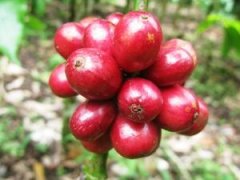
The 4th China Mangshi Coffee Culture Festival will be held in Mangshi, Dehong Prefecture.
China Economic News Network: (Deng Daoyong) on December 30, the reporter learned from the Yunnan Coffee Industry Association: sponsored by the China-ASEAN Coffee Cooperation Committee, the China Coffee Engineering Research Center, and the Yunnan Coffee Industry Association, the 4th China Mangshi (International) Coffee Culture Festival hosted by Dehong Hougu Coffee Co., Ltd. will be held in Mangshi, Dehong Prefecture, from January 23 to 25, 2015.

There is a serious global shortage of coffee beans. Overseas buyers have set their sights on China's producing areas.
Due to the continuous drought in Brazil, the world's largest coffee producer, and the sharp decline in coffee bean production, international buyers have set their sights on the Chinese market.

A brief introduction to the treatment method of grinding degree and baking degree of high-quality Angolan boutique coffee beans
The Secretary-General of the African Coffee Organization (Coffee Organization), Joseph Farrayasarko, said today that Angola is expected to regain its position as a major coffee producer in the world due to the launch of a nationwide coffee planting campaign. In analyzing the global financial crisis and the situation of the international coffee market, Sako said that there are still gaps in the international coffee market. Angolan coffee should not only improve its output, but also its quality.

There is a serious shortage of coffee beans in the world, and overseas buyers have set their sights on China's producing areas.
Great wisdom Asdak news agency, October 29, due to the world's largest coffee producer Brazil suffered a persistent drought, coffee bean production has dropped sharply, international buyers have set their sights on the Chinese market.